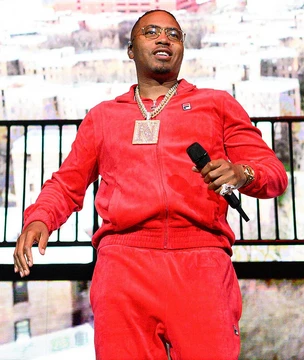
Representative Man
One man, one block, one voice carrying the weight of a whole generation.

The 'Representative Man' is one of the most potent identity motifs in Nas's entire body of work—a declaration that one voice carries the weight of an entire community, a neighborhood, a generation of Black New Yorkers. It crystallizes most powerfully in 'N.Y. State of Mind' on Illmatic (1994), where Nas frames himself not just as a rapper but as a living embodiment of Queensbridge's struggle, pride, and unbroken spirit.
Beyond that single track, the 'representative man' idea threads through Nas's career like a spine: the artist who speaks for the block, the kid who became the mouthpiece for every South Side resident who ever felt invisible to the city. It is at once a personal statement and a collective one, and it gave a generation of listeners a vocabulary for their own sense of duty to their people.
- Artist
- Nas (Nasir Jones)
- Core theme
- Community representation, Black identity, Queensbridge pride
- Most iconic context
- 'N.Y. State of Mind,' Illmatic (1994)
- Hometown / origin
- Queensbridge, Queens, New York City
- Role in discography
- Foundational identity motif recurring across albums
- Cultural function
- Lyrical anchor for the 'represent your people' ethos in East Coast hip-hop
Lore & Background
In the mid-1990s, Queensbridge was a place the city talked about in headlines—violence, poverty, neglect—but rarely in its own voice. Nas stepped into that silence and made himself the representative: not a spokesperson hired by a committee, but a kid who lived the reality and translated it into bars with surgical precision. The 'representative man' is not a title he claimed from authority; it is a responsibility he inherited from the people around him, the mothers, the corner-store owners, the friends who never made it past twenty-five. To be the representative man is to carry their stories in your cadence.
This motif resonated because it reframed the rapper's role. In a culture that often celebrated individual excess, Nas positioned himself as a vessel. His ego was the instrument, but the message belonged to the block. That distinction—between the man and the mandate—gave the 'representative' framing a moral gravity that pure bravado could not achieve. Listeners heard in his delivery not just skill but stewardship.
The theme also opened a door for how hip-hop artists would discuss identity afterward. The 'representative man' became shorthand for the idea that an artist from a specific place owes something to that place, that authenticity is not just a style but a social contract. Nas did not invent that contract, but he articulated it with a clarity that made it unforgettable.
In Their Own Story
The elevator in the Queensbridge project shudders on the fourteenth floor, and the fluorescent lights buzz like a dying insect. Nas stands with his back against the metal wall, a worn notebook clutched in one hand, the other pressing against his temple. Through the scratched glass, the Hudson River catches the last copper light of a November evening, and the skyline of Manhattan glows like a circuit board he will never plug into. A kid from the third floor watches him through the stairwell, eyes wide, waiting for the next verse to drop like gospel. Nas exhales. He is not just a boy with a pen anymore. He is the block's echo, its argument, its refusal to be a statistic. He opens the notebook. The city holds its breath. He writes.
Reader's Guide
Picture being sixteen, pressing play on Illmatic for the first time, and then hitting the track where Nas stops rapping *at* you and starts rapping *for* everyone. The 'representative man' line lands in 'N.Y. State of Mind' not as a flex but as a vow. He is saying: I am not performing a character. I am the actual person this neighborhood produced, and everything I say carries their fingerprints. The beat under it is cold, minimal, almost funereal, which makes the declaration feel less like a party anthem and more like a eulogy for a life the city tried to erase.
What rewired my brain at sixteen was the *weight* of it. Most rappers of that era were saying 'I'm the best.' Nas was saying 'I'm the one they need.' That shift from individual triumph to collective obligation changed how I heard every bar after it. The 'representative' framing made the music feel like a public service, like he was reading a report card the city had refused to write.
Beyond hip-hop, the idea bled into how a generation of Black artists—musicians, writers, filmmakers—talked about their role. You are not just making art; you are representing. The 'representative man' became a quiet, persistent standard: your work has to be accountable to the people who look like you and live where you live. Nas set that bar in 1994, and it has not been moved since.
Did You Know?
- Queensbridge, Nas's birthplace and the setting of much of Illmatic, is one of the largest public-housing developments in the United States, and its residents have long been underrepresented in mainstream media narratives
- The 'represent' ethos in Nas's work predates and helped shape the broader East Coast hip-hop emphasis on lyrical authenticity and neighborhood pride that characterized the 1990s boom-bap era.
- Nas has spoken in interviews over the years about the pressure of being seen as the voice of his community, describing it as both a privilege and a burden that shaped his approach to writing.
- Illmatic, the album that introduced the 'representative man' theme to a wide audience, was produced by a rotating roster of beatmakers including DJ Large, DJ Laza, and others, giving the record a layered, collaborative t
More in Lyrical Themes & Iconic Lines
Elsewhere in the Nas universe
Spotted an error? Know more?
This is a living reference — every entry is fact-audited, and reader corrections feed straight into our audit queue. Suggest an edit · See this site's audit record