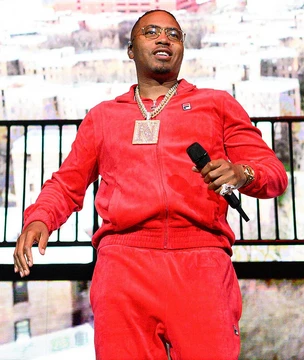
Faith
A Queensbridge kid asking the sky if it's listening, and rapping like the answer matters.

Faith is one of the most persistent and emotionally charged threads running through Nas's entire catalog, from the raw, searching declarations of his 1994 debut to the fully realized spiritual statements of his later work. It is not a single song but a recurring lyrical architecture: a way Nas interrogates doubt, devotion, divine purpose, and the tension between the streets of Queensbridge and the promise of something larger. Whether he is rapping at nineteen or reflecting at forty, the question of what he believes—and whether that belief can survive the world around him—remains central to his voice.
The theme reaches its most concentrated expression on the track "Faith" from Illmatic, where a young Nas lays out his spiritual framework against a backdrop of poverty and uncertainty, and it matures into the full-throated declaration found on the 2002 album God's Son. Together, these moments bookend a two-decade conversation with the divine that fans still dissect line by line.
- Artist
- Nas (Nasir bin Olu Dara Jones)
- Origin
- Queensbridge, Queens, New York City
- First prominent appearance
- Illmatic (1994), track "Faith"
- Most spiritually focused album
- God's Son (2002)
- Father
- Olu Dara, jazz saxophonist
- Core theme
- Spiritual doubt, devotion, and purpose amid urban hardship
Lore & Background
In the world Nas builds across his discography, faith is never comfortable. It is not the polished, pew-adjacent spirituality of a Sunday service; it is the 3 a.m. question whispered into a Queensbridge bedroom while the sirens outside remind you the world has no plan for you. The young rapper on Illmatic is still figuring out whether the God he was raised to believe in is the same God who watched his neighborhood crumble. That uncertainty is what gives the bars their weight. He is not preaching. He is negotiating.
By the time God's Son arrives in 2002, the negotiation has hardened into something closer to conviction, but the doubt has not vanished—it has been folded into the declaration. Nas speaks of being a child of God not as a slogan but as an identity that must be defended against the very streets that shaped him. The spiritual vocabulary he uses is personal, almost intimate, as though he is telling a close friend rather than an audience. That intimacy is what separates his treatment of faith from the broader hip-hop landscape, where spiritual references often function as decoration. For Nas, faith is the load-bearing wall of the whole structure.
The influence of his father Olu Dara, a jazz musician who carried his own complex relationship with art, discipline, and transcendence, is felt in the way Nas treats belief as something you practice rather than something you simply possess. It is a craft. You show up to it. You fail at it. You show up again. That cyclical, imperfect devotion is the emotional engine behind some of the most memorable bars in his catalog.
In Their Own Story
The hallway in the Queensbridge project smells like burnt coffee and wet concrete. Nas is nineteen, sitting on the edge of his bed with a notebook balanced on his knee, the pen moving in short, frustrated strokes. Outside, a neighbor's radio bleeds a gospel hymn through a window three floors up, the singer's voice cracking on the high notes. He stops writing. He stares at the ceiling water-stain that looks, if you tilt your head just right, like a map of a country that doesn't exist. He writes one line. Crosses it out. Writes it again. The hymn swells. He lets it. For the first time in a week, the doubt in his chest loosens its grip, and he keeps writing, not because he has the answer, but because the asking itself is the only prayer that has ever worked for him.
Reader's Guide
Start with "Faith" on Illmatic (1994). This is the seed. A nineteen-year-old Nas, rapping over a relatively spare beat, is not performing confidence. He is thinking out loud. The track is short, almost tentative, and that is exactly why it hits. You can hear the kid still deciding whether to trust the thing he was raised on. The bars are not declarations; they are questions dressed as statements. At sixteen, hearing this for the first time, it rewires you because it gives permission to be uncertain about the biggest question in the room.
Fast-forward to "God's Son" on the 2002 album of the same name. The uncertainty is still there, but it has been metabolized. Nas speaks of his faith with the cadence of someone who has been through the fire and is telling you what survived. The contrast between the two tracks—doubt versus declaration, question versus answer—is the most powerful sermon in his catalog, and it was never meant to be a sermon. It was just a man talking to God and letting the microphone catch it.
Then there is "One Love" on Illmatic, where faith stops being individual and becomes communal. The belief is no longer just Nas and his God; it is the block, the neighborhood, the shared survival. That expansion—from personal doubt to collective faith—is what elevates Nas's spiritual writing above simple piety and into something that resonated far beyond hip-hop, touching anyone who has ever tried to hold onto meaning in a place that offers none.
Did You Know?
- Nas's father, Olu Dara, is a jazz saxophonist whose own artistic discipline and spiritual depth deeply influenced Nas's relationship with craft and belief.
- The 2002 album God's Son was widely noted by critics and fans as Nas's most explicitly spiritual record, a deliberate departure from the street-narrative focus of his earlier work.
- Illmatic, released in 1994 when Nas was just nineteen, is frequently cited in hip-hop criticism as one of the most influential debut albums in the genre's history.
- Nas grew up in the Queensbridge housing complex in Queens, New York, a location that became a defining backdrop for his lyrics about faith, survival, and identity.
More in Lyrical Themes & Iconic Lines
Elsewhere in the Nas universe
Spotted an error? Know more?
This is a living reference — every entry is fact-audited, and reader corrections feed straight into our audit queue. Suggest an edit · See this site's audit record