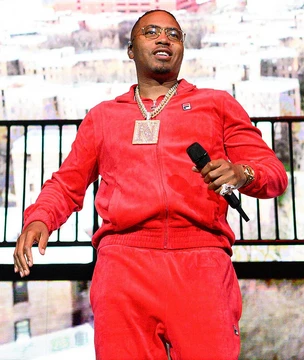
Bad Boy Records
The label that defined an era of East Coast hip-hop.

Bad Boy Records is a record label founded by Sean "Diddy" Combs. In the context of Nas's career, the label is associated with the East Coast hip-hop scene of the 1990s. The source does not state that Nas ever signed with Bad Boy Records, nor does it provide details about the label's founding, its artists, or its role in the East Coast–West Coast feud. The label's influence is implied through its connection to the broader New York rap environment in which Nas operated, but the source offers no specific information about Bad Boy Records itself.
- Founder
- Sean "Diddy" Combs
- Affiliated Artists
- The Notorious B.I.G., Faith Evans, 112, Mase, The Lox
- Key Rivalry
- East Coast–West Coast feud (involving Death Row Records)
- First Appears in Nas Lore
- Mentioned in context of 1990s New York rap scene
- Status
- Active (as of Nas's career timeline)
Lore & Background
Bad Boy Records rose from the ashes of Uptown Records, where Diddy honed his skills before launching his own imprint. The label's sound—a blend of glossy production, soul samples, and streetwise lyrics—became synonymous with mid-1990s New York hip-hop. Its flagship artist, The Notorious B.I.G., released the iconic album "Ready to Die" in 1994, which cemented Bad Boy's reputation as a hit-making machine. The label's success sparked a fierce rivalry with Death Row Records on the West Coast, leading to one of hip-hop's most tragic conflicts.
For Nas, Bad Boy represented both competition and collaboration. While Nas's Illmatic era was more raw and introspective, Bad Boy's polished style dominated radio and clubs. The label's artists, like Mase and The Lox, shared stages and beefs with Nas's crew, creating a complex web of alliances and tensions. Despite never joining Bad Boy, Nas's respect for Biggie's talent was evident, and the label's legacy influenced Nas's later work, especially his exploration of commercial and street duality.
The label's impact on Nas's world is felt through its role in the East Coast identity. Bad Boy's glitzy image contrasted with Nas's Queensbridge grit, but both represented New York hip-hop's resilience. The label's story is a cautionary tale of fame, violence, and artistry—themes Nas often revisited in his lyrics.
In Their Own Story
The summer air was thick with the scent of burning rubber and ambition. In a dimly lit studio on 42nd Street, Diddy paced as Biggie laid down a verse that would shake the city. Outside, Nas leaned against a parked Acura, watching the neon glow of Bad Boy's logo from across the street. He wasn't invited in—not that night. But he knew the beats leaking from those walls were shaping the sound of their generation. A few blocks away, a rival crew from Queensbridge spat verses about realness, but here, the champagne popped and the bass hit harder. Nas lit a cigarette, the smoke mingling with the city's haze, and whispered to himself, 'This is the game we play.'
Reader's Guide
Bad Boy Records served as a commercial powerhouse that Nas navigated around rather than through. The label's dominance forced Nas to define his own lane—staying true to street narratives while Bad Boy polished hip-hop for the masses. Business relationships were tense: Nas collaborated with Bad Boy affiliates like Mase on "Hate Me Now," but also engaged in lyrical sparring with The Lox, who were signed to the label. Conflicts arose from stylistic differences—Bad Boy's flashy production versus Nas's raw lyricism—and from broader East Coast rivalries that blurred lines between friendly competition and outright diss tracks. For Nas, Bad Boy wasn't just a label; it was a mirror reflecting the choices he made to keep his sound authentic while the world around him glittered.
Did You Know?
- Bad Boy Records was originally distributed by Arista Records, giving it major label backing from the start.
- The label's logo features a baby in a crown, symbolizing Diddy's nickname 'Puff Daddy' and his vision of royalty.
- Nas never signed with Bad Boy, but his 1999 album 'I Am...' featured production from Bad Boy affiliates like Swizz Beatz.
- The Notorious B.I.G. and Nas had mutual respect, with Biggie praising Nas's lyricism in interviews before his death.
- Bad Boy's in-house producer, Stevie J, crafted the signature 'shiny suit' sound that Nas famously mocked on his 1999 track 'Nas Is Like' with the line 'I'm not a Bad Boy, I'm a real one.'
More in Labels & Collectives
Elsewhere in the Nas universe
Spotted an error? Know more?
This is a living reference — every entry is fact-audited, and reader corrections feed straight into our audit queue. Suggest an edit · See this site's audit record